AI in video marketing: What can be automated and what is better left human.
Wednesday, April 1, 2026
The integration of artificial intelligence into video marketing is no longer a distant vision of the future, but firmly established in the production processes of countless agencies and marketing departments. The allure is enormous: algorithms promise a drastic reduction in production costs, unprecedented campaign scalability, and a speed that human teams simply cannot match.
But with the growing enthusiasm for fully automated content creation systems comes a certain disillusionment. Not everything that is technically feasible leads to successful brand communication.
This article explores the fine but crucial line between aspects of video marketing that you can confidently delegate to a machine and those creative, emotional, and legal areas where humans absolutely must remain in control. Only those who understand this symbiosis will be able to create long-term campaigns that not only please algorithms but also convince real people. Every creative process begins with a hurdle: the proverbial blank sheet of paper. This is where artificial intelligence unfolds perhaps its greatest potential. Language models are trained to recognize patterns, synthesize immense amounts of data, and generate countless variations of an idea in seconds. When a marketing team faces the task of developing a new video campaign, AI can act as a highly efficient sparring partner.
Instead of spending hours in a meeting searching for the perfect "hook" for a video, marketers can feed an AI with the core features of their product and instantly request dozens of different opening sequences. The AI can structure scripts according to proven psychological patterns—such as the AIDA model (Attention, Interest, Desire, Action) or the PAS formula (Problem, Agitation, Solution). Especially when companies want to make complex topics visually tangible and create professional explainer videos, artificial intelligence provides solid groundwork in the didactic preparation of difficult-to-understand subjects. It breaks down the big picture into logical, sequential chapters for an initial briefing.
This first script draft, the so-called "First Draft," is a massive accelerator. Automation deeply intervenes in the workflow here, taking over the tedious work of structuring. But this is where the AI's task ends, and the work of the human editor begins. Because a structure is merely the skeleton of a video. It must be brought to life by a human being.
Even in creating storyboards, conceptualizing image sequences, and generating variations for A/B testing, the machine is far inferior to humans in terms of individuality and consistent image sequences. The biggest blind spot of artificial intelligence is its tendency towards mediocrity. Large language models function, to put it very simply, by predicting the statistically most probable next word. This inevitably leads to AI-generated texts that, while grammatically flawless, logically consistent, and fluent in language, often sound shockingly soulless and generic. They are the verbal equivalent of overly polished elevator music. Pleasant, but completely unremarkable.
In modern video marketing, however, inconspicuousness is a death sentence. To even be noticed in the daily flood of content, a brand needs distinctiveness, edges, and a unique identity. This so-called brand voice is a highly complex construct. It comprises industry-specific jargon, a very particular rhythm, subtle humor, perhaps a touch of self-irony, or a very specific kind of empathy for the target group's problems.
An AI doesn't understand irony on a fundamental, interpersonal level. It can't craft a script that perfectly captures the rebellious undertone a startup needs to position itself against established corporations. If you take scripts unfiltered from an AI tool, you risk your brand sounding exactly like thousands of other brands using the same tool.
The human task, therefore, is to polish the rough diamond of the AI. An experienced video editor or writer takes the structured AI draft and deliberately breaks the rules. They insert unexpected pauses, use unusual metaphors, and adapt the word choice so that it fits the company's DNA perfectly. Only in this way does a text become an emotional experience.
For simple internal training videos or purely informative tutorials, this may suffice. However, as soon as the goal is to build an emotional connection—for example, to sustainably increase reach and interaction rates with a compelling social media video—the technology reaches its limits. Psychologists and marketing experts often refer to this as the “uncanny Valley”. This effect describes the phenomenon that artificial figures that appear almost human trigger a subtle feeling of unease in viewers. The eye registers minimal, unnatural micro-expressions, slightly asynchronous blinking, or the lack of genuine emotional resonance in the voice. This very strange phenomenon of the uncanny valley can be observed in digital faces, whose perfected but rigid features break the illusion of humanity.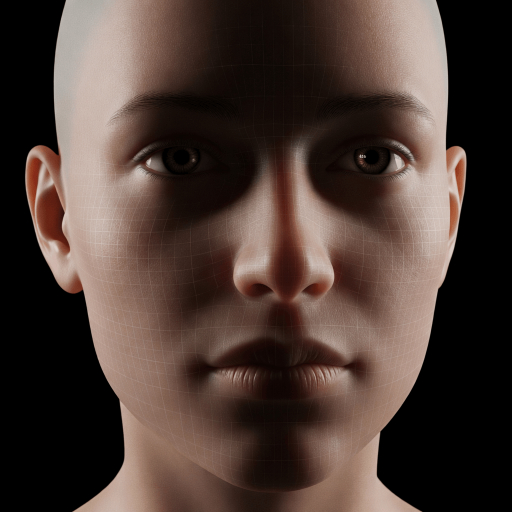 Trust is the most valuable currency in marketing, and people build trust with each other. Genuine rapport often arises from imperfection: a spontaneous smile, a brief hesitation, an honest look that reveals enthusiasm for a product.
When viewers get the feeling that a company isn't even willing to have video content created by a real person, it subconsciously signals a lack of appreciation. For brands that rely on long-term customer relationships, trust, and authenticity, real people remain absolutely indispensable.
German and European copyright law is very clear: it protects exclusively "personal intellectual creations." For a work to be protected by copyright, it must have been created by a human being. A video script or background image generated entirely by AI does not, in itself, enjoy copyright protection. This leads to the paradoxical situation that competitors could theoretically copy parts of your AI-generated campaign with impunity, provided your own human contribution is insufficient. Therefore, you must significantly edit, curate, and modify the raw AI material with human input to establish your own exclusive rights to your marketing material.
Furthermore, there is a massive risk of copyright infringement against third parties. AI models like ChatGPT or Midjourney have been trained on billions of data records from the internet, including millions of copyrighted texts, images, and videos. It cannot be completely ruled out that an AI might reproduce copyrighted passages or visual concepts when creating a script or storyboard. If you publish this material without checking it, you as a company are liable for the copyright infringement, not the software manufacturer.
For this reason, it is essential to continuously monitor the legal requirements for AI in marketing. Every output must undergo rigorous human and legal review. This also applies to advertising claims: AI tends to "hallucinate" and sometimes invents facts, studies, or product features that do not exist in reality. Careless publication of such false statements violates the law against unfair competition and can quickly lead to costly cease-and-desist letters. For marketers, it is worthwhile to study closely how specialist lawyers assess the copyright issues concerning AI content in social media in order to avoid liability traps.
In addition, the new EU AI Act is changing the rules of the game. Among other things, it mandates strict transparency requirements. In the future, photorealistic AI content (so-called deepfakes or AI avatars) must be clearly labeled as such. The days when it was possible to present consumers with machine-generated faces as genuine brand ambassadors without their knowledge are drawing to a close.
Publishing high-quality content and integrating it with e-commerce elements requires specialized platforms. Companies are well advised to embed their carefully produced videos in environments that project credibility and quality. High-quality publications and articles offer an excellent opportunity to complement their content with editorial value. A well-researched accompanying article that delves deeper into the video's topic significantly strengthens brand authority and signals high relevance to search engines like Google.
But the more companies rely on AI, the more similar the average online content will become. In a world where algorithmic perfection becomes a cheap commodity, the value of genuine, human authenticity increases dramatically. Use the time gained to refine your brand voice, delve deeply into the psychology of your target audience, and develop legally sound, trustworthy campaigns. Today, more than ever, the difference between a good video and a brilliant one lies in the part of the work that no machine in the world can program: human intuition.
But with the growing enthusiasm for fully automated content creation systems comes a certain disillusionment. Not everything that is technically feasible leads to successful brand communication.
This article explores the fine but crucial line between aspects of video marketing that you can confidently delegate to a machine and those creative, emotional, and legal areas where humans absolutely must remain in control. Only those who understand this symbiosis will be able to create long-term campaigns that not only please algorithms but also convince real people.
Script ideas, structure and overcoming the blank page
Every creative process begins with a hurdle: the proverbial blank sheet of paper. This is where artificial intelligence unfolds perhaps its greatest potential. Language models are trained to recognize patterns, synthesize immense amounts of data, and generate countless variations of an idea in seconds. When a marketing team faces the task of developing a new video campaign, AI can act as a highly efficient sparring partner.Instead of spending hours in a meeting searching for the perfect "hook" for a video, marketers can feed an AI with the core features of their product and instantly request dozens of different opening sequences. The AI can structure scripts according to proven psychological patterns—such as the AIDA model (Attention, Interest, Desire, Action) or the PAS formula (Problem, Agitation, Solution). Especially when companies want to make complex topics visually tangible and create professional explainer videos, artificial intelligence provides solid groundwork in the didactic preparation of difficult-to-understand subjects. It breaks down the big picture into logical, sequential chapters for an initial briefing.
This first script draft, the so-called "First Draft," is a massive accelerator. Automation deeply intervenes in the workflow here, taking over the tedious work of structuring. But this is where the AI's task ends, and the work of the human editor begins. Because a structure is merely the skeleton of a video. It must be brought to life by a human being.
Even in creating storyboards, conceptualizing image sequences, and generating variations for A/B testing, the machine is far inferior to humans in terms of individuality and consistent image sequences.
Why tonality and brand voice require human craftsmanship
The biggest blind spot of artificial intelligence is its tendency towards mediocrity. Large language models function, to put it very simply, by predicting the statistically most probable next word. This inevitably leads to AI-generated texts that, while grammatically flawless, logically consistent, and fluent in language, often sound shockingly soulless and generic. They are the verbal equivalent of overly polished elevator music. Pleasant, but completely unremarkable.In modern video marketing, however, inconspicuousness is a death sentence. To even be noticed in the daily flood of content, a brand needs distinctiveness, edges, and a unique identity. This so-called brand voice is a highly complex construct. It comprises industry-specific jargon, a very particular rhythm, subtle humor, perhaps a touch of self-irony, or a very specific kind of empathy for the target group's problems.
An AI doesn't understand irony on a fundamental, interpersonal level. It can't craft a script that perfectly captures the rebellious undertone a startup needs to position itself against established corporations. If you take scripts unfiltered from an AI tool, you risk your brand sounding exactly like thousands of other brands using the same tool.
| Video: KI-Videos erkennen |
Trust cannot simply be programmed
The question of the human factor becomes even more pressing when we move beyond pure text and consider visual and auditory implementation. The market is currently flooded with tools that generate lifelike AI avatars and synthetic voices. It's now easily possible to type in a script and, a few minutes later, receive a video in which a deceptively realistic-looking, AI-generated person flawlessly recites this text into the camera in one of fifty languages.For simple internal training videos or purely informative tutorials, this may suffice. However, as soon as the goal is to build an emotional connection—for example, to sustainably increase reach and interaction rates with a compelling social media video—the technology reaches its limits. Psychologists and marketing experts often refer to this as the “uncanny Valley”. This effect describes the phenomenon that artificial figures that appear almost human trigger a subtle feeling of unease in viewers. The eye registers minimal, unnatural micro-expressions, slightly asynchronous blinking, or the lack of genuine emotional resonance in the voice. This very strange phenomenon of the uncanny valley can be observed in digital faces, whose perfected but rigid features break the illusion of humanity.
Trust is the most valuable currency in marketing, and people build trust with each other. Genuine rapport often arises from imperfection: a spontaneous smile, a brief hesitation, an honest look that reveals enthusiasm for a product.When viewers get the feeling that a company isn't even willing to have video content created by a real person, it subconsciously signals a lack of appreciation. For brands that rely on long-term customer relationships, trust, and authenticity, real people remain absolutely indispensable.
The legal minefield: copyright, liability and transparency
Beyond the creative and emotional challenges, the use of AI in video marketing brings with it profound legal risks that are often ignored in the euphoria of automation. Anyone publishing videos operates in the sensitive area of competition and copyright law. AI software cannot protect you from liability in this regard – on the contrary, it can even cause it.German and European copyright law is very clear: it protects exclusively "personal intellectual creations." For a work to be protected by copyright, it must have been created by a human being. A video script or background image generated entirely by AI does not, in itself, enjoy copyright protection. This leads to the paradoxical situation that competitors could theoretically copy parts of your AI-generated campaign with impunity, provided your own human contribution is insufficient. Therefore, you must significantly edit, curate, and modify the raw AI material with human input to establish your own exclusive rights to your marketing material.
Furthermore, there is a massive risk of copyright infringement against third parties. AI models like ChatGPT or Midjourney have been trained on billions of data records from the internet, including millions of copyrighted texts, images, and videos. It cannot be completely ruled out that an AI might reproduce copyrighted passages or visual concepts when creating a script or storyboard. If you publish this material without checking it, you as a company are liable for the copyright infringement, not the software manufacturer.
For this reason, it is essential to continuously monitor the legal requirements for AI in marketing. Every output must undergo rigorous human and legal review. This also applies to advertising claims: AI tends to "hallucinate" and sometimes invents facts, studies, or product features that do not exist in reality. Careless publication of such false statements violates the law against unfair competition and can quickly lead to costly cease-and-desist letters. For marketers, it is worthwhile to study closely how specialist lawyers assess the copyright issues concerning AI content in social media in order to avoid liability traps.
In addition, the new EU AI Act is changing the rules of the game. Among other things, it mandates strict transparency requirements. In the future, photorealistic AI content (so-called deepfakes or AI avatars) must be clearly labeled as such. The days when it was possible to present consumers with machine-generated faces as genuine brand ambassadors without their knowledge are drawing to a close.
A question of environment: The right publication of your content
Once you've found the perfect balance between AI efficiency and human creativity, once your script captures the right brand voice, and everything is legally sound, the question of distribution remains. Even the best video will be wasted if it's not presented in the right context.Publishing high-quality content and integrating it with e-commerce elements requires specialized platforms. Companies are well advised to embed their carefully produced videos in environments that project credibility and quality. High-quality publications and articles offer an excellent opportunity to complement their content with editorial value. A well-researched accompanying article that delves deeper into the video's topic significantly strengthens brand authority and signals high relevance to search engines like Google.
| Area | Focus on Automation (AI) | Focus on Human Expertise |
| Idea Generation & Structure | Pattern recognition, rapid brainstorming, AIDA structures, topic clusters. | Curating the best ideas, alignment with the long-term corporate strategy. |
| Language & Tone | Grammatical accuracy, translations, formatting of raw data. | Genuine charisma on camera, genuine emotion in the voice, building trust, handcrafted graphics and animations. |
| Visual & Auditory Implementation | Color correction, removal of filler words, automated subtitling. | Genuine charisma on camera, genuine emotion in the voice, building trust, handcrafted graphics and animations. |
| Quality assurance | Not a reliable function. | Fact-checking, plagiarism detection, compliance with copyright and competition law. |
Conclusion: AI as an exoskeleton for creative minds
Artificial intelligence will not replace human marketers. The future of video marketing belongs not to machines alone, but to human teams who know how to use machines as tools to enhance their own capabilities. Don't think of AI as a successor, but as a powerful exoskeleton. It provides the strength to effortlessly handle the heavy lifting involved in data analysis, ideation, and content structuring.But the more companies rely on AI, the more similar the average online content will become. In a world where algorithmic perfection becomes a cheap commodity, the value of genuine, human authenticity increases dramatically. Use the time gained to refine your brand voice, delve deeply into the psychology of your target audience, and develop legally sound, trustworthy campaigns. Today, more than ever, the difference between a good video and a brilliant one lies in the part of the work that no machine in the world can program: human intuition.